Morocco Day Trip from Tarifa: The Complete Guide
Tarifa is the southernmost point in continental Europe. On a clear morning, standing on the old town walls, you can see Morocco across the Strait of Gibraltar: the mountains of the Rif rising from the water, close enough to seem like an optical illusion. The crossing that separates two continents, two seas, and two entirely different worlds takes thirty-five minutes by fast ferry.
A Morocco day trip from Tarifa is one of the most genuinely unusual things you can do from any European holiday base. It is not a theme park version of another culture. It is the real thing, reachable before lunch and returned from before dinner.
The Ferry Crossing
Operator: FRS Maroc
Route: Tarifa to Tangier-Ville
Crossing time: approximately 35 minutes
Frequency: multiple departures daily, year-round
Passengers: foot passengers only (no cars on this route)
The Tarifa ferry terminal is in the port, right next to the town centre. Tickets can be booked online in advance through FRS Maroc, or purchased at the terminal on the day, though in peak summer, booking ahead is worth doing.
Bring your passport. UK and EU citizens do not need a visa for Morocco (up to 90 days), but your passport will be stamped by Moroccan border control on arrival and departure. An ID card is not sufficient. A full passport is required.
The crossing itself is fast and generally smooth, though the Strait of Gibraltar can be choppy when the Levante wind is blowing. If you are prone to seasickness, a short-acting remedy taken before boarding is sensible.
Guided Tour or Independent?
This is the most important decision to make before you go.
Guided tour (recommended for first-timers): Several operators run day trips from Tarifa that include the return ferry, guided visits to Tangier's Medina and Kasbah, lunch, and return transport. These typically last 8–10 hours. The advantage is not just convenience. A good guide will give you context, navigate the more intense attention that tourists receive in the Medina, and take you to places you would not find alone. Prices typically range from €60–90 per person including the ferry.
Independent: Entirely possible, particularly for those with experience of North Africa or previous Morocco travel. The Tarifa–Tangier route is well-worn and Tangier is used to independent travellers. Navigation apps work in Morocco, and the main areas of interest (the Medina, Kasbah, Cap Spartel) are accessible by taxi or on foot. Book the ferry independently and plan your day in advance.
What to See in Tangier
The Medina
The old city is the heart of any Tangier visit. Narrow lanes, tiled archways, spice stalls, craftsmen at work: it is immediately, completely different from anything in Spain. The Medina is best explored on foot, ideally with a guide on a first visit, as the street layout is deliberately disorientating and the attention from touts can be relentless without someone to deflect it.
The Kasbah
Above the Medina, the Kasbah (citadel) offers panoramic views back across the Strait toward Tarifa and Spain. The Kasbah Museum occupies the former sultan's palace and is worth an hour. The surrounding streets are quieter than the lower Medina.
The Grand Socco and Petit Socco
The two main squares that serve as anchors for the old city. The Grand Socco (Place du 9 Avril) is a large open square at the entrance to the Medina, surrounded by cafés. The Petit Socco (Zoco Chico) is a smaller, more intimate square deeper inside, historically the meeting point for artists, writers, and travellers passing through Tangier.
Cap Spartel
About 14 km west of the city, Cap Spartel marks the point where the Atlantic and Mediterranean formally meet. A lighthouse sits on the headland, and the views (with Africa spread beneath you and the coast of Spain visible across the water) are exceptional. Worth the taxi ride if time allows.
Practical Details
Currency: Morocco uses the Moroccan Dirham (MAD). Dirhams cannot be bought outside Morocco, so exchange cash or use an ATM on arrival. Euros are sometimes accepted in tourist areas but at unfavourable rates. Bring cash, as many smaller shops and stalls do not accept cards.
What to wear: Tangier is a relatively cosmopolitan city by Moroccan standards, but dressing modestly is respectful and makes the day more comfortable. Avoid shorts and vest tops in the Medina and Kasbah; light trousers and a top that covers the shoulders are appropriate for both men and women.
Language: Arabic and Darija (Moroccan Arabic) are primary, with French widely spoken. English is increasingly common in tourist areas. A few words of French or Spanish will be appreciated.
Safety: Tangier is a busy city and the areas visited on day trips are well-travelled. The main annoyance for tourists is persistent approaches from unofficial guides and touts, particularly in the Medina. A firm but polite "no thank you" and keeping moving is the standard approach. Keep valuables in an inside pocket rather than a bag, and be aware of your surroundings in crowded areas.
Time zone: Morocco is on GMT (or GMT+1 during Ramadan), so there is effectively no time change from the UK in summer.
What About Chefchaouen?
The famous blue city of Chefchaouen, in the Rif mountains, is sometimes offered as a day trip from Tarifa. At approximately 120 km from Tangier, it makes for an extremely long day with relatively little time in the city itself. It is a far better destination for those spending a night or two in Morocco. As a pure day trip from Tarifa, Tangier is the right choice.
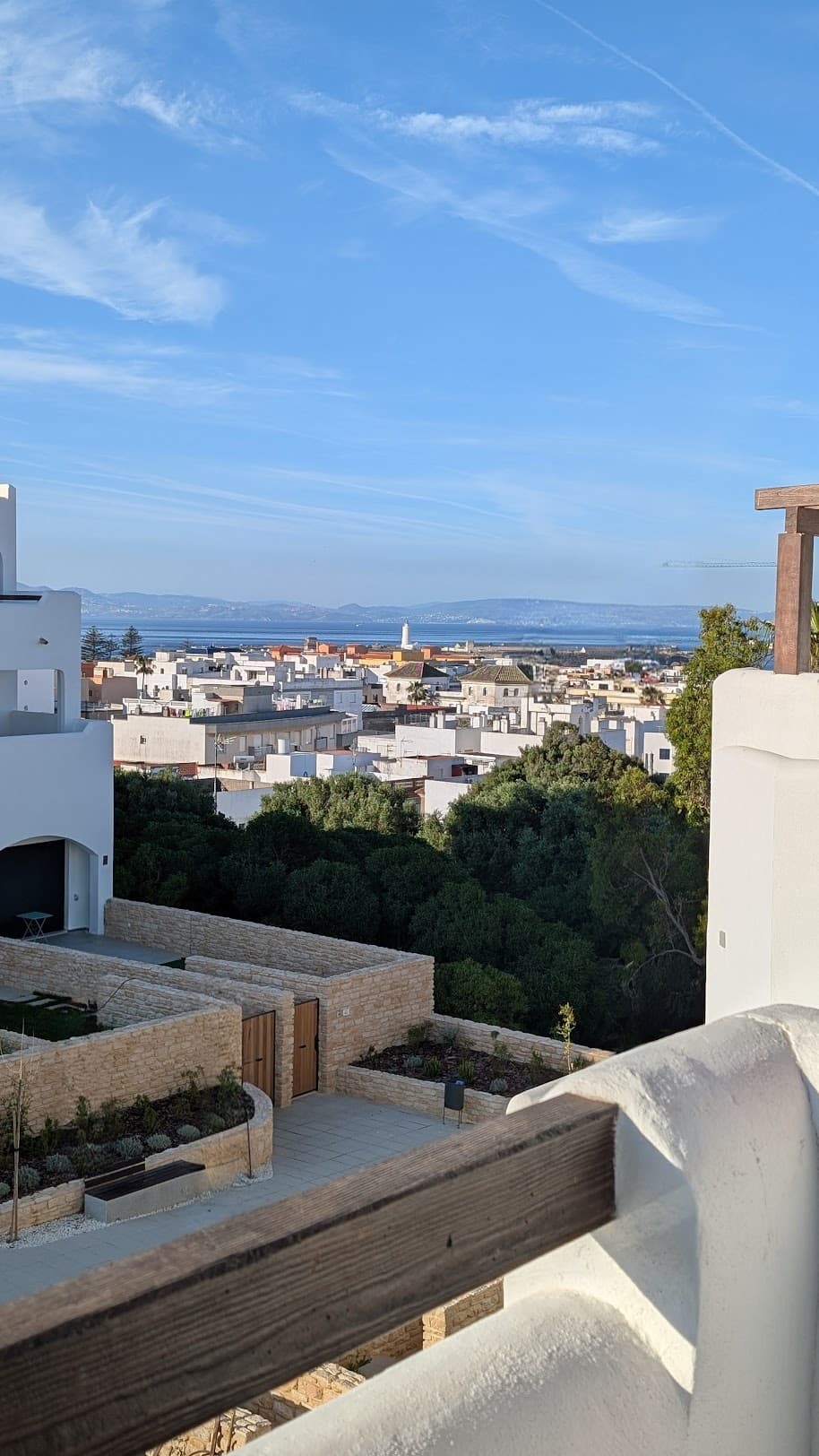
Terraza Atlántica is just a few minutes' walk from Tarifa's port, where the Morocco ferries depart. The view from the rear terrace faces directly across the Strait. On a clear morning, you can see exactly where you're going. Check availability if you'd like to use Tarifa as your base for one of Europe's more unusual day trips.
Frequently Asked Questions
Can you do a day trip to Morocco from Tarifa?
Yes. The FRS Maroc fast ferry runs from Tarifa to Tangier in approximately 35 minutes, with multiple crossings daily. It is one of the most accessible cross-continental day trips in the world.
How long is the ferry from Tarifa to Morocco?
The fast ferry crossing takes approximately 35 minutes. Allow additional time at both ports for boarding and passport control. Total port time is typically 20–30 minutes each way.
Do you need a visa to go from Tarifa to Morocco?
UK and EU passport holders do not need a visa for Morocco (up to 90 days). You will need a full passport, not just an ID card. Your passport is stamped on entry and exit at Moroccan border control.
Is it safe to visit Tangier on a day trip from Tarifa?
Yes. Tangier is a popular tourist destination and the areas visited on day trips are well-travelled. The main thing to manage is persistent approaches from touts in the Medina, which a guide handles on your behalf. Keep valuables secure and stay aware of your surroundings as you would in any busy city.
Should I book a guided tour or go independently?
For first-time visitors, a guided tour is strongly recommended. Guides handle the ferry, Moroccan border formalities, transport, and navigation, and provide context that makes the day far richer. Independent travel works well for those with prior Morocco experience.
What currency do I need for Morocco?
Morocco uses the Moroccan Dirham (MAD). Dirhams cannot be purchased outside Morocco, so exchange money or use an ATM on arrival in Tangier. Bring cash, as many smaller shops and stalls are cash only.
Come and see for yourself.
The terrace faces south. Africa on the horizon.