Best Time to Visit Tarifa: Month by Month Guide
Tarifa defies the usual rules about when to visit an Andalusian town. The wind changes everything, not just the weather, but the character of the place. A Tarifa in strong Levante is a completely different experience from a calm, still Tarifa at the same time of year. And the town itself shifts markedly between the packed international summer season and the quiet, local winters.
The honest answer to when to go depends on what you want from the trip.
The Seasons at a Glance
| Month | Temp | Wind | Crowds | Notes |
|---|---|---|---|---|
| January | 14°C | Variable | Very low | Quiet, local, some closures |
| February | 15°C | Variable | Very low | Good for walking, whale watching |
| March | 17°C | Building | Low | Spring wildflowers, uncrowded |
| April | 19°C | Moderate | Low–medium | Excellent shoulder season |
| May | 22°C | Moderate | Medium | One of the best months |
| June | 25°C | Strong | Medium–high | Wind season begins, good weather |
| July | 29°C | Very strong | High | Peak kite season, busy beaches |
| August | 30°C | Very strong | Very high | Busiest month, book well ahead |
| September | 27°C | Strong | Medium | Summer feel, fewer crowds |
| October | 23°C | Easing | Low–medium | Warm, excellent shoulder season |
| November | 18°C | Variable | Low | Quiet, mild, off-season prices |
| December | 15°C | Variable | Very low | Peaceful, local Christmas atmosphere |
May and June: The Sweet Spot
For most visitors, May and June offer the best combination of everything: warm and sunny weather, the wind season building but not yet relentless, beaches that are busy but not packed, and prices noticeably below the August peak. The days are long, the sea is warm enough for swimming, and Tarifa still has a relaxed pace before the full summer influx.
June in particular hits the ideal balance. The Levante is consistent enough for good kitesurfing, but calm days are still common. Restaurants are fully open, the old town is lively, and you can still find accommodation without booking six months ahead.
July and August: Peak Season
July and August are when Tarifa is at its most international and most intense. The wind blows strongly and consistently: world-class conditions for kitesurfers, and genuinely challenging for anyone hoping to lounge on the beach without a face full of sand. Temperatures are high, though the wind makes the heat manageable in a way that inland Andalusia is not.
The beaches fill up, prices peak, and the old town becomes busy with visitors from across Europe and beyond. It is a vibrant, energetic time to visit, but not a quiet one. Book accommodation well in advance, expect the kite beaches to be standing room only on strong wind days, and accept that this is the season when Tarifa leans fully into its wind sport identity.
If you are coming specifically to kitesurf or windsurf, July and August are prime time. If you want calm days on the beach, you may find them frustrating.
September and October: Second Window
September keeps much of summer's warmth while the crowds begin to thin. The sea is at its warmest, the Levante still blows well, and accommodation becomes easier to find. It is an excellent month for those who want the full Tarifa experience without the August intensity.
October is increasingly popular as a shoulder season choice. Temperatures remain genuinely warm (22–24°C), the wind eases but does not disappear, and the town transitions back toward its local character. It is a particularly good time for whale watching, hiking in the national park, and exploring the surrounding villages without the summer rush.
Spring: April and March
April is one of the most underrated months to visit. The wildflowers are out across the Strait's headlands and hillsides, the weather is warm and largely settled, and Tarifa is at its least crowded. Prices are low, the best restaurants are fully open, and you will have the beaches largely to yourself on weekdays.
March is earlier and less reliable: more chance of rain, some businesses still in off-season mode, but with rewards for those who catch a good week.
Winter: November to February
Tarifa in winter is a different proposition and a genuinely good one, depending on what you are looking for. Temperatures rarely drop below 10°C and often sit in the mid-teens, cold by Andalusian standards, but mild compared to northern Europe. The town empties of tourists and becomes itself again: local bars, unhurried mornings, long walks on deserted beaches.
The wind in winter is less predictable than summer. It can be flat for a week and then blow a Levante gale for four days straight. Storms roll in off the Atlantic. But between the weather systems, winter days in Tarifa can be strikingly clear, with exceptional visibility across the Strait and a quality of light that does not exist in summer.
Some seasonal businesses close from November through March. The core of the old town stays open year-round, but check ahead for specific restaurants or tour operators.
Whale watching is actually excellent in winter. The cetacean populations in the Strait are present year-round, and the calmer boat conditions of autumn and winter can make for better sightings than the choppy summer sea.
Winter has also become a popular season for two particular groups who know Tarifa well: kitesurfers and digital nomads. For kitesurfers, the winter Levante can produce some of the most powerful and uncrowded conditions of the year. The kite beaches that are shoulder-to-shoulder in August become empty, and the wind does not care what month it is. For remote workers, Tarifa in winter offers fast Wi-Fi, affordable accommodation, a walkable town with good coffee, and the kind of Atlantic light and open horizon that makes working from home feel like a very different thing. A growing community of long-term winter residents from across northern Europe has taken root here over the past decade.
Terraza Atlántica is well suited to longer winter stays. The apartment has a full kitchen, high-speed Wi-Fi, a dedicated workspace, and secure underground parking. Long-stay rates are available for stays of a month or more. Get in touch if you would like to discuss options.
Wind: What to Expect
Understanding the wind is the single most useful thing you can do before planning a Tarifa trip.
The Levante blows from the east, through the Strait, often for days at a time. It is strong, dry, and consistent: the wind that makes Tarifa famous. On a 30-knot Levante day, the Atlantic beaches are spectacular to look at and very difficult to enjoy as a sunbather. Sand blows horizontally. Umbrellas are useless. The kite beaches are packed.
The Poniente blows from the west, off the Atlantic. It is softer, wetter, and generally more pleasant for non-surfers. A Poniente day means calmer beaches and a warmer feel, but less reliable conditions for wind sports.
The Strait acts as a funnel that amplifies both winds. Conditions in Tarifa can be significantly stronger than the surrounding area. A day that is perfectly calm in Algeciras can be 25 knots in Tarifa. The local forecast matters more than the regional one.
The best weather apps for Tarifa are Windy and WindFinder, both showing the local wind forecast in detail and used by everyone from kitesurfers to ferry operators.
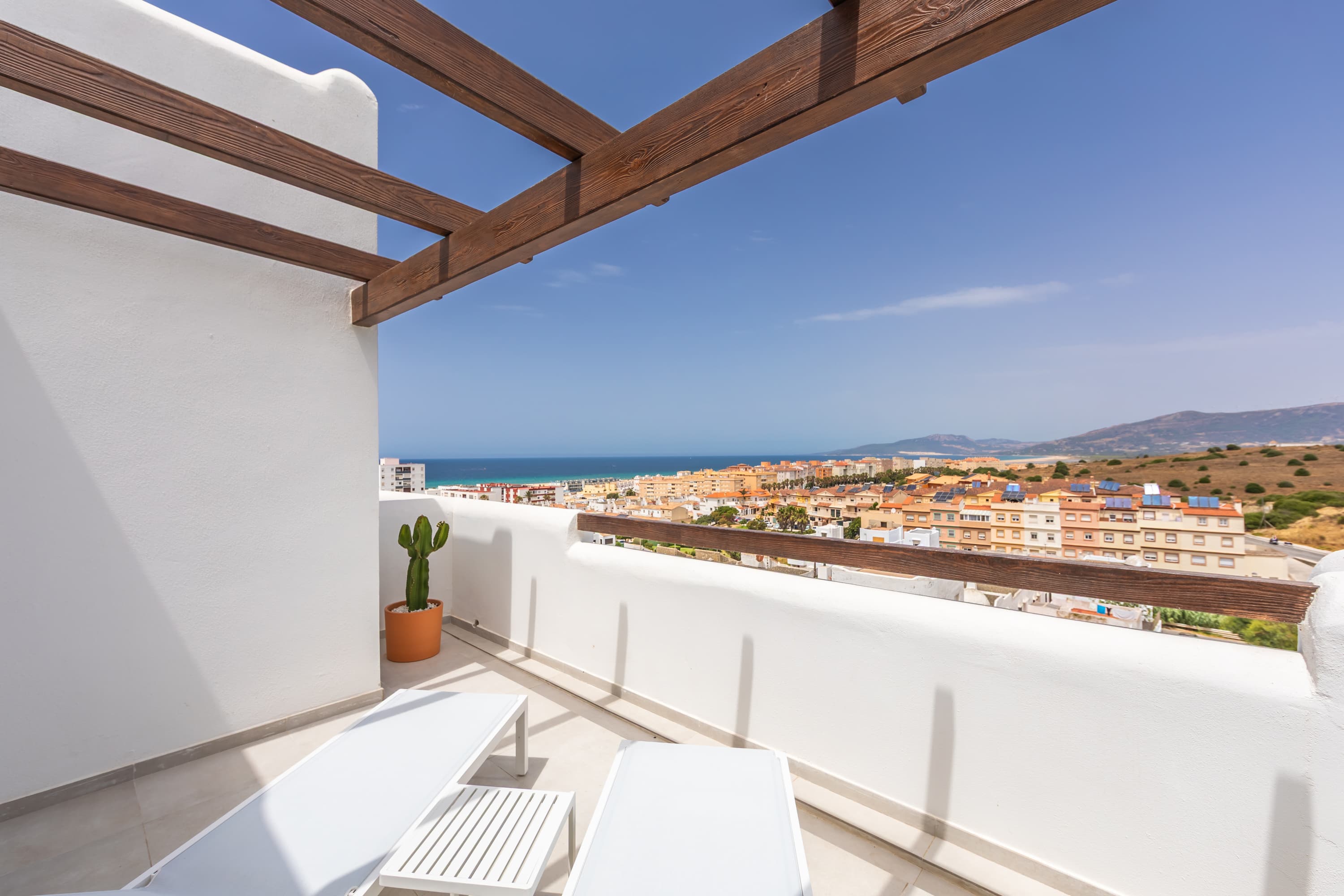
Terraza Atlántica is available year-round. The apartment is well suited to the full range of seasons: sheltered terraces for windier days, and a rear terrace that faces south across the Strait for the clear, still evenings that make autumn and spring particularly special. Check availability for your preferred dates.
Frequently Asked Questions
What is the best time to visit Tarifa?
May, June, and September are the sweet spot: warm, sunny, less crowded than peak summer, and with a good mix of wind and calm days. July and August guarantee heat and wind but bring higher prices and busy beaches. October and April are excellent for warmth without crowds.
How hot is Tarifa in summer?
July and August typically reach 28–32°C, but the near-constant wind makes it feel cooler than inland Andalusia. Tarifa rarely suffers oppressive heat. The Strait acts as a natural air conditioner.
Is Tarifa windy all year?
Yes, but the level varies considerably. Summer has the most consistent wind (prime kitesurfing season). Spring and autumn are more variable: some very windy days, some perfectly calm. Winter brings storms and strong Levante periods interspersed with clear, settled spells.
What is the Levante wind in Tarifa?
The Levante is the east wind that blows through the Strait of Gibraltar, often strongly and for days at a time. It creates world-class kitesurfing conditions but can make beach days uncomfortable for non-surfers. Sand blows, umbrellas flip, and the sea gets choppy. The Poniente (west wind) is gentler and more pleasant for sunbathing.
Can you visit Tarifa in winter?
Yes. Winter Tarifa is quiet, mild (12–18°C), and genuinely beautiful. Prices drop, crowds disappear, and the town returns to its local character. It is particularly good for whale watching, walking, and remote working. Some seasonal businesses close from November through March.
Come and see for yourself.
The terrace faces south. Africa on the horizon.